
Welcome to Real Estate Profit Engine Review
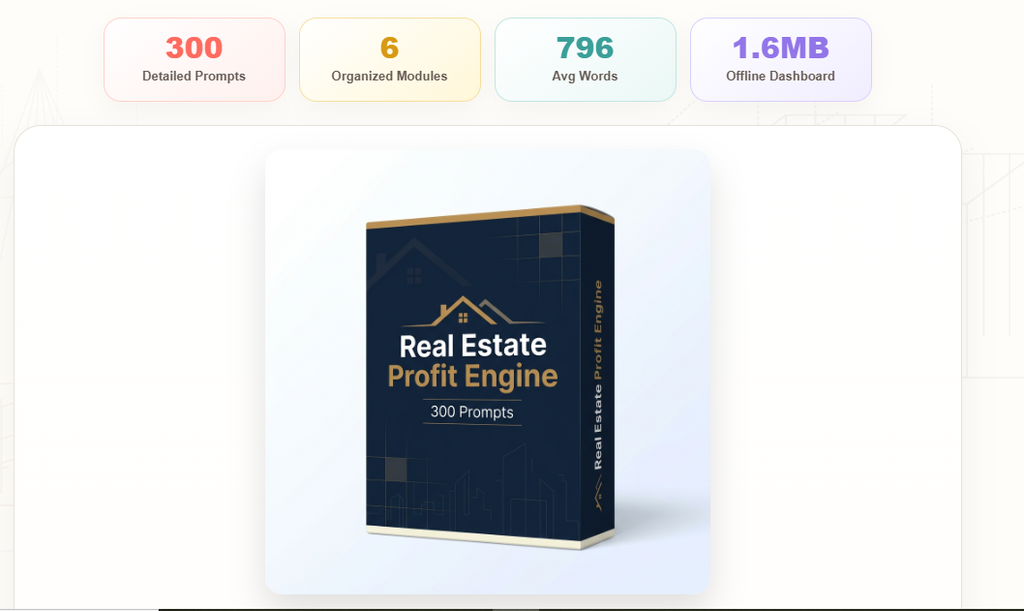
Finding profitable real estate deals often means analyzing dozens of properties, estimating renovation costs, calculating potential returns, and keeping track of seller leads. For individual investors and wholesalers, managing all of this with spreadsheets and multiple software tools can quickly become complicated.
The Real Estate Profit Engine is designed to simplify that process by bringing essential real estate deal analysis and lead-management features into one web-based platform.
What makes the platform particularly interesting is how it was created. Instead of relying entirely on traditional software development, the application was built using Lovable, an AI-powered application development platform.
In this Real Estate Profit Engine review, we’ll look at what the platform offers, how it can help real estate investors, its potential limitations, its technology, and whether an AI-built real estate application can realistically handle everyday deal analysis.
Important: Features, pricing, integrations, and availability can change as the platform develops. Always verify current information directly with the service before making a purchasing or business decision.
What Is the Real Estate Profit Engine?
The Real Estate Profit Engine is a web-based real estate investment tool designed to help users organize property information and evaluate potential deals.
Its primary audience includes:
- Real estate investors
- House flippers
- Wholesalers
- Rental property investors
- Property managers
- Real estate entrepreneurs
- Beginners learning real estate investing
Instead of switching between spreadsheets, calculators, and separate lead-tracking systems, the platform aims to provide a centralized dashboard for basic property analysis and lead organization.
The main idea is straightforward: enter information about a potential property, review the financial numbers, and determine whether the opportunity deserves further investigation.
For investors who regularly analyze potential acquisitions, having a simple interface can be more convenient than maintaining complicated spreadsheets.
👉 Try Real Estate Profit Engine & Analyze Deals Instantly 🚀
Real Estate Profit Engine Key Features
The platform focuses on several areas that are important for real estate deal analysis.
1. Real Estate Deal Calculator
One of the most important features is the deal-analysis functionality.
Investors can use property information such as:
- Purchase price
- Estimated repair costs
- After Repair Value (ARV)
- Expected selling price
- Rental income
- Operating expenses
- Financing assumptions
These figures can help investors estimate potential profitability before spending significant time or money investigating a property.
For fix-and-flip investors, the ability to quickly compare purchase costs, renovation expenses, and projected resale value can be particularly useful.
2. ROI and Investment Analysis
Real estate investors need more than just an estimated selling price. They also need to understand the potential return on their investment.
Depending on the calculations available in the platform, users can evaluate metrics such as:
- Estimated profit
- Return on investment
- Cap rate
- Cash-on-cash return
- Repair budget
- Potential acquisition costs
These calculations don’t replace proper due diligence, but they can provide a useful starting point when screening potential deals.
3. Lead Tracking
Finding properties is only one part of real estate investing. Keeping track of potential sellers and opportunities is another major challenge.
The Real Estate Profit Engine includes a dashboard designed to organize property and lead information.
For example, investors may want to track:
- Property addresses
- Seller information
- Lead status
- Potential deal value
- Contact information
- Follow-up activity
- Notes about a property
A centralized lead dashboard can make it easier to remember which opportunities require follow-up.
4. Clean Dashboard Interface
One of the noticeable aspects of the application is its modern interface.
The dashboard uses a relatively clean visual structure rather than overwhelming users with dozens of menus and complicated settings.
For investors who primarily want to enter property numbers and quickly understand the results, this type of interface can reduce unnecessary friction.
5. Mobile-Friendly Design
Real estate investors are rarely sitting at a desk all day.
Wholesalers and agents may receive property information while traveling, meeting sellers, visiting properties, or speaking with other investors.
A responsive web application can therefore be useful because users can access their information from a desktop, tablet, or smartphone browser.
👉 Try Real Estate Profit Engine & Analyze Deals Instantly 🚀
How Was Real Estate Profit Engine Built?
One of the most interesting aspects of this project is its underlying technology.
The application was developed using Lovable, an AI-assisted application development platform.
The general technology architecture can be represented like this:
              User Enters Property Data
                       │
                       ▼
             React Frontend Interface
                       │
                       ▼
              Financial Calculations
                       │
                       ▼
              Supabase Backend/Database
                       │
                       ▼
          Saved Deals & Lead Information
The frontend uses modern web development technologies such as React and Tailwind CSS, while Supabase can provide backend functionality including database storage and authentication.
This demonstrates how AI-assisted development tools are making it possible to create functional web applications much faster than traditional development workflows.
However, using AI to build an application doesn’t automatically guarantee that the software will be suitable for every professional use case.
Hands-On Look: What Works Well?
Simple Deal Screening
The biggest advantage of a streamlined real estate calculator is speed.
Investors frequently need to determine whether a property is worth investigating before spending hours researching it.
A simple workflow can look like this:
Property → Purchase Price → Repairs → ARV → Estimated Expenses → Potential Profit
This type of initial screening can help users quickly separate interesting opportunities from properties that don’t appear to meet their investment criteria.
Less Spreadsheet Dependence
Excel and Google Sheets remain extremely useful for real estate investing, but spreadsheets can become complicated.
A spreadsheet may require users to:
- Create formulas
- Format cells
- Build dashboards
- Maintain multiple tabs
- Update calculations
- Organize leads manually
A dedicated web application can provide a more structured experience.
Beginner-Friendly Approach
Real estate investment software can sometimes be intimidating for beginners.
The Real Estate Profit Engine’s relatively focused approach makes it easier for a new investor to understand the basic relationship between acquisition costs, renovation expenses, property value, and potential profit.
That doesn’t mean the platform can replace learning real estate fundamentals. Instead, it can serve as a practical tool for applying those concepts.
Potential Drawbacks and Limitations
No real estate software is perfect, and there are several areas users should consider before relying on an AI-built application for their entire investment operation.
Limited Third-Party Integrations
Professional investors often depend on external data sources and services.
Examples include:
- MLS data
- Property databases
- Skip-tracing services
- Marketing platforms
- Email automation
- SMS services
- Calling systems
- Accounting software
If these integrations aren’t available or require custom development, users may still need additional tools.
Not Necessarily a Complete CRM Replacement
A dedicated enterprise real estate CRM can provide advanced functionality such as:
- Team permissions
- Automated workflows
- Lead scoring
- Calling and texting
- Email campaigns
- Marketing automation
- Detailed reporting
- Task management
The Real Estate Profit Engine appears better suited to straightforward deal analysis and lead organization than replacing every function of a large real estate CRM.
AI-Built Doesn’t Mean Maintenance-Free
AI-assisted development can dramatically speed up application creation, but applications still require testing, maintenance, security updates, performance optimization, and ongoing development.
As the number of users and database records grows, more advanced technical work may become necessary.
This is an important distinction for anyone considering AI-built software for serious business operations.
Real Estate Profit Engine vs. Traditional Real Estate Software
| Feature | Real Estate Profit Engine | Traditional CRM | Spreadsheet |
|---|---|---|---|
| Setup | Quick | Moderate to complex | Moderate |
| Deal Analysis | Yes | Usually | Yes |
| Lead Tracking | Yes | Yes | Manual |
| Ease of Use | Simple | Varies | Depends on setup |
| Mobile Access | Web-based | Usually | Web/app dependent |
| Advanced Integrations | Limited/varies | Often extensive | Limited |
| Customization | Varies | Often extensive | High |
| Enterprise Features | Limited | Often available | Limited |
| Learning Curve | Lower | Moderate to high | Moderate |
The right choice depends on the user’s workflow.
Someone who wants a lightweight deal-analysis tool may not need the complexity of an enterprise CRM. On the other hand, a large investment company managing multiple employees and hundreds of leads may require more advanced functionality.
👉 Try Real Estate Profit Engine & Analyze Deals Instantly 🚀
Who Should Consider Real Estate Profit Engine?
The platform may be particularly relevant to users who want a straightforward way to organize property opportunities and perform initial financial analysis.
Solo Real Estate Investors
Individual investors can benefit from having property calculations and lead information organized in one place.
Beginner Wholesalers
New wholesalers may appreciate a simpler interface while learning how to evaluate acquisition costs, repairs, ARV, and potential assignment opportunities.
House Flippers
Flippers can use deal calculations to estimate whether the projected resale value justifies the acquisition and renovation costs.
Real Estate Entrepreneurs
Entrepreneurs experimenting with different acquisition strategies may find a lightweight web application useful for quickly screening opportunities.
Who May Need Something More Advanced?
Larger investment companies may need features that go beyond basic deal analysis.
For example, companies with multiple employees may require detailed user permissions, advanced reporting, automated marketing, integrated phone systems, and extensive third-party data connections.
In those situations, the Real Estate Profit Engine may work better as a complementary analysis tool rather than the central system for the entire business.
Is Real Estate Profit Engine Worth It?
Whether the Real Estate Profit Engine is worthwhile depends heavily on what you’re expecting from it.
If your main goal is to quickly analyze real estate deals, organize leads, and avoid unnecessary spreadsheet complexity, the platform offers an interesting approach.
Its biggest appeal is simplicity.
Rather than trying to become an enormous all-in-one real estate CRM, the application focuses on the core information investors need when evaluating potential deals.
However, users should not confuse a convenient calculator with comprehensive real estate due diligence.
A projected profit number is only as accurate as the assumptions behind it. Investors should independently verify property values, repair estimates, financing costs, taxes, insurance, closing expenses, rental income, and other relevant expenses before making an investment decision.
Pros and Cons Analysis
Strengths (The Pros)
- Ultra-Fast Performance: Thanks to Vite and React rendering, calculations update instantly without page reloads.
- Zero Spreadsheet Maintenance: Eliminates the frustration of broken Excel formulas, corrupted file versions, or software compatibility issues across Mac and Windows devices.
- Intuitive Design: The clean UI powered by Tailwind CSS ensures that even non-technical users can start analyzing deals within minutes of opening the site.
- Cost Efficiency: Avoids the steep monthly subscription fees associated with bloated real estate software suites.
- Accessible Anywhere: Works across desktop monitors, iPads, and mobile smartphones without requiring heavy native application downloads.
Limitations (The Cons)
- Lack of Native Phone / SMS Tools: Unlike expensive enterprise CRMs like Podio or REsimpli, it does not include a built-in virtual phone dialer or automated text-messaging drip sequence out of the box.
- No Direct Live MLS Feeds: Users must manually input property comps and estimated ARV values obtained from Zillow, Redfin, or local MLS reports.
- Scaling Restrictions: While ideal for solo investors and small teams, high-volume investment firms executing dozens of offers weekly may eventually require custom enterprise backend integrations to handle multi-agent user permissions.
Final Thoughts
The Real Estate Profit Engine is an interesting example of how AI-assisted development is changing the way specialized business applications can be created.
Its combination of a modern interface, real estate calculations, lead organization, and responsive web design makes the concept appealing to investors who want a simpler alternative to complicated software systems.
The biggest advantage is its focus. Users who only need essential deal-analysis functionality may prefer a streamlined application over a large CRM filled with features they rarely use.
At the same time, professional real estate businesses should carefully evaluate integrations, security, scalability, automation, and team-management requirements before making it the foundation of their operations.
Overall, the Real Estate Profit Engine is worth exploring for investors looking for a simple real estate deal calculator and lead-management solution, particularly if they value speed and ease of use over extensive enterprise features.
👉 Try Real Estate Profit Engine & Analyze Deals Instantly 🚀
Frequently Asked Questions
What is Real Estate Profit Engine?
Real Estate Profit Engine is a web-based application designed to help real estate investors analyze potential property deals and organize property leads.
Is Real Estate Profit Engine a CRM?
It includes lead-tracking functionality, but users should evaluate its current feature set to determine whether it meets their requirements for a full real estate CRM.
Can Real Estate Profit Engine calculate real estate ROI?
The platform is designed around real estate deal calculations and can help users evaluate potential returns using property financial information.
Is Real Estate Profit Engine suitable for beginners?
Its simplified dashboard and focus on core deal metrics can make it approachable for beginners, although users should still understand basic real estate investment calculations.
Can it replace Excel for real estate investing?
For basic deal screening and lead organization, it may reduce the need for spreadsheets. However, investors with highly customized financial models may still prefer Excel or Google Sheets.
Is an AI-built real estate application reliable?
AI-assisted development can produce functional applications, but reliability depends on the application’s architecture, testing, security practices, maintenance, integrations, and ongoing development. Users should evaluate the specific application rather than assuming AI-built software is automatically reliable.
Should investors rely entirely on its profit calculations?
No. Any projected profit or return should be treated as an estimate based on the information entered. Investors should conduct independent due diligence and verify important financial assumptions before purchasing a property.
Bottom Line
The Real Estate Profit Engine takes a straightforward approach to real estate deal analysis: enter the numbers, organize the opportunity, and quickly evaluate the potential economics.
For solo investors, beginners, wholesalers, and property-focused entrepreneurs, that simplicity may be the main attraction.
For larger organizations requiring extensive automation, integrations, team workflows, and enterprise CRM capabilities, additional software may still be necessary.
As AI-powered application development continues to evolve, tools like this show how specialized business software can be created and launched faster than traditional development methods. The real test, however, is not simply how quickly an application can be built—it’s how reliably and effectively it performs when real investors use it to make real business decisions.